Case Study
How Pixel Starships uses Accord to catch the issues that slip past community managers

Full Transcript
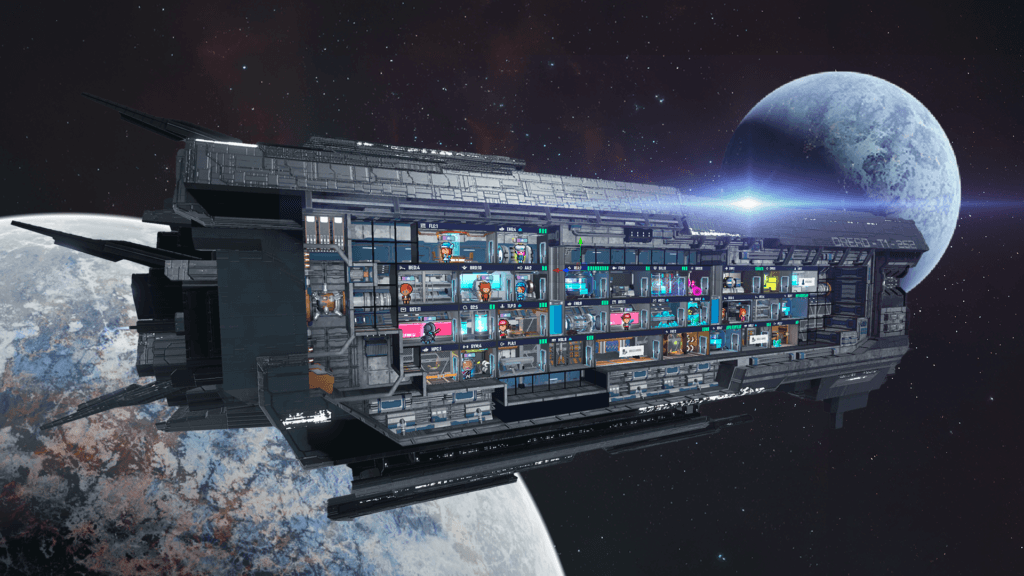
I'm Xin, and I've been running Savy Soda for almost 20 years. We make a game called Pixel Starships. I wanted to make a game I like to play, which is a strategy game — specifically space strategy games. And it's a very nerdy game, where you build your ship, move characters around.
We launched it in 2016. It became quite a big hit, with over 10 million downloads, and now we've released the second version.
First of all, we've got four community managers. They're excellent, they're on it — different time zones throughout the day. So they're listening to player feedback and posting updates. So Discord is 24/7. Nobody's going to be online 24 hours of the day. So even if you did your 12 hours on Discord, you're still going to miss more than half of the feedback.
And we've got about 20,000 or so members. And these are like — actually engaged members, like maybe two to three thousand online at any time. And people are posting, maybe, tens of thousands of messages a month. So I think analysing what people are saying — and also being able to respond to the support tickets in a short amount of time — that's a big task.
The most hardcore players are definitely on Discord, and perhaps some are also on Reddit. But for that more live interaction, I think Discord is the centre. It is much less spam on Discord, which is great. On in-game chats, you still get, kind of like, you know, the A/S/L type of questions. But Discord is more about the actual game, play strategies, and in PSS2's case, a lot about bugs, I think, is what we found. It's our main feedback channel from players.
One of the things we did before was ask our community manager to give us a list of, like, the top five issues. When we started testing Accord fairly early on, the first test we did was, like, okay — let's get the top five issues from Accord for the last month, let's say. And then we'll get the top five issues from our community manager. And there's an overlap, which confirms it's reporting the right issues.
But then what's interesting is, there were also issues that weren't raised by our community manager — which was quite frequent — that were reported by the users.
So I think having both is a good way for us to just not miss any issues.
Having this tool is extremely useful, and much more efficient than going through Discord messages, for sure. I'll definitely recommend Accord to any studios running a live services game.
For us, before we had Accord, we were entirely reliant on looking at messages one at a time and just talking to our community managers — which have been fantastic — but nobody could cover that amount of feedback that we get on Discord, which is, I think, 20,000 messages a month.
So having that Accord report gives us another channel where we can easily see what the players are thinking about, and where we should be prioritising our focus for the next update.
Expand

Background
Savy Soda has been making games for nearly twenty years. Their flagship is Pixel Starships — a deeply nerdy space strategy game where you build a ship, crew it, and run it through whatever comes. The first version, launched in 2016, passed 10 million downloads. The second version, PSS2, is now live.
Around that game sits a Discord of roughly 20,000 engaged members, with two to three thousand online at any given moment and tens of thousands of messages a month. Founder Xin Zhao sat down to talk about what it actually takes to listen to that many people at once.
The Challenge
Savy Soda has four community managers, spread across time zones, listening to player feedback and posting updates around the clock. They're good. But the maths of a 24/7 Discord doesn't bend.
"Even if you did your 12 hours on Discord, you're still going to miss more than half of the feedback."
For a live-services game in the middle of a sequel launch, that gap matters. Pixel Starships' Discord is the main feedback channel from players — strategy talk, ship builds, and, in PSS2's case, a steady stream of bug reports.
For a long time, the workaround was the obvious one: ask the community managers what they were seeing. Each cycle, the team would request a top-five list of issues — the things to take to product, the things to fix next. It was a thoughtful read of the channel, by people who knew the players. But it was still a sample of a sample.
"Nobody could cover that amount of feedback that we get on Discord, which is, I think, 20,000 messages a month."


The Solution
When Savy Soda first started testing Accord, they ran the cleanest validation experiment you could ask for. Pull the top five issues from Accord for the last month. Pull the top five issues from the community manager. Compare.
The overlap landed first — confirmation that Accord was reading the channel the same way an experienced human was. Same issues, same ranking. That part was the sanity check.
The interesting part was the gap.
"There were also issues that weren't raised by our community manager — which was quite frequent — that were reported by the users."
Accord was surfacing a layer underneath the community manager's view. Not contradicting it — adding to it. Issues that hadn't bubbled into the team's attention yet, but were live in the channel and being reported by players.
That set the working pattern: keep the community managers, run Accord alongside them, and treat the union of the two as the real backlog.

The Outcome
"So I think having both is a good way for us, to just not miss any issues."
For a live-services game, the cost of a missed issue compounds — bugs slip into the next patch, players churn before the team realises there was something to fix. Accord plugs the part of the channel that no team, however well-staffed, can read end to end. Xin's team still gets the human read from their community managers; they now also get the systematic one from Accord.
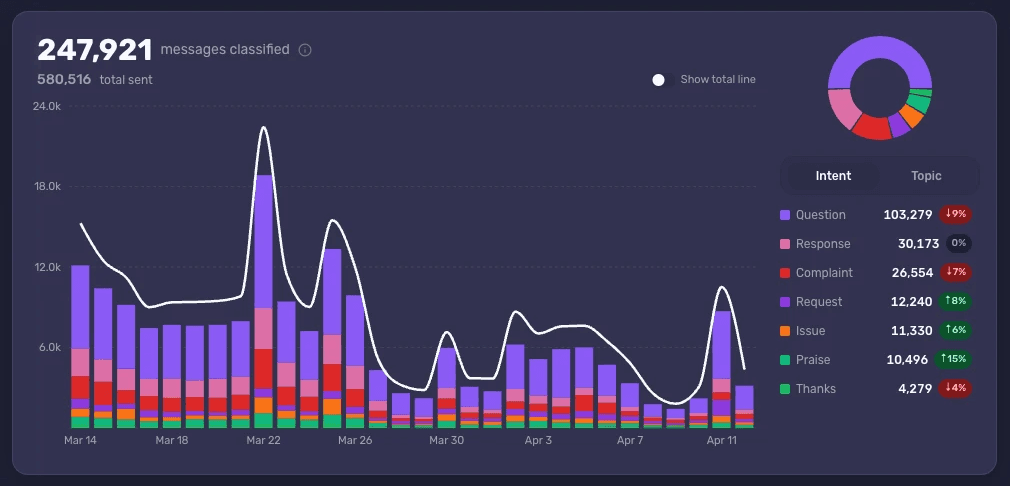
The day-to-day shift is simpler than it sounds: instead of reading 20,000 messages one at a time, the team reads a report. They know what the players are talking about, where the volume is sitting, and where to point the next update.
"Having this tool is extremely useful — and much more efficient than going through Discord messages, for sure. I'll definitely recommend Accord to any studios running a live services game."
— Xin Zhao, Founder, Savy Soda (Pixel Starships)